Salvatore Ferragamo’s Evolution: Beginning as Shoemaker to Global Icon
Scarcely any labels in the style industry carry the significance of artisanal skill quite like Salvatore Ferragamo. What originated as the ambition of a youthful Italian shoemaker expanded into a house closely associated with high-end shoes, leather goods, and, eventually, one of the most well-known handbag collections in the world. These days, when shoppers look up a ferragamo bag or browse a ferragamo shop, they are tapping into more than a century of design philosophy built on ease, structure, and artistry. Knowing that history helps explain why a salvatore ferragamo bag still commands attention on runways and in retail alike.
The house’s story is not merely about shoes, though shoes built the groundwork. It is about a unwavering pursuit of bodily accuracy merged with theatrical glamour, a fusion that in time branched out into bags, accessories, and ready-to-wear. This article follows that arc, explains how the house’s aesthetic vocabulary evolved, and provides a hands-on look at the bags shoppers are drawn to now, in 2026.
The Beginning: A Shoemaker’s Obsession
Salvatore Ferragamo was born in 1898 in Bonito, a modest town in southern Italy. He crafted his first pair of shoes at age nine, for his sister’s confirmation, and by eleven he had casually apprenticed with a local shoemaker before launching his own small shop at home. This was not a hobby. It was an youthful, almost all-consuming fascination with how shoes were made and how they conformed to the human foot.
Ferragamo, at sixteen, left for the United States, first settling in Boston before moving on to California. He opened a shop in Santa Barbara and later in Hollywood, repairing and constructing footwear for the rapidly growing film industry. This stretch ferragamo shopping bag of time turned out to be enormously significant. Ferragamo studied anatomy at the University of Southern California, believing that proper shoe design called for an understanding of the human body, especially weight distribution across the foot. That scientific grounding would later distinguish the brand from competitors who approached shoemaking as nothing more than looks.
By the 1920s, he was crafting shoes for Hollywood royalty, including stars like Mary Pickford and Greta Garbo. His reputation as the “Shoemaker to the Stars” grew fast, and demand outpaced what a small workshop could deliver. This friction between handmade craftsmanship and expanding demand would accompany the brand for decades, even as it branched into leather goods and, eventually, the salvatore ferragamo bags collections recognized worldwide today.
Return to Italy and the Birth of a International House
In 1927, Ferragamo made his way back to Italy, settling in Florence, a city already celebrated for expertise in leatherworking and skilled artisans.
Building on local craftsmanship traditions, he set up his company there, still pushing forward with innovation throughout.
Access to tanning workshops and deft craftsmen in Florence allowed him to produce footwear of a quality that matched his aspirations.
The 1929 market collapse and the ensuing Great Depression hit the company hard, pushing it into bankruptcy by 1933. Rather than backing down, Ferragamo reshaped and reconstructed the company, a move that showed he was as tenacious in business as he was creative in design. He had acquired the Palazzo Spini Feroni in Florence by 1938, a building that still serves today as the company’s headquarters and flagship store. Today that same site also holds the Museo Salvatore Ferragamo, evidence of how deeply heritage is tied to the brand’s identity.
Ferragamo’s creative advances during this era were genuinely groundbreaking. He secured a patent on the cage heel, its wedge counterpart was invented in 1938 using cork obtained during wartime material shortages, and the invisible sandal emerged subsequently, securing the Neiman Marcus Award in 1947. These were not decorative gimmicks. Instead, they were technical solutions arising from scarcity and creativity working together — a pattern that would recur throughout the company’s history.
Branching Out Past Shoes: Bags, Accessories, and Ready-to-Wear
In 1960, Salvatore Ferragamo left this world, but it was his wife Wanda, along with their six children, who assumed control of the company and steered it toward new categories. At this point its handbag story truly began to take shape. Across the 1960s and 1970s, leather goods turned into a core component of the business, ever a fitting extension of shoemaking expertise.
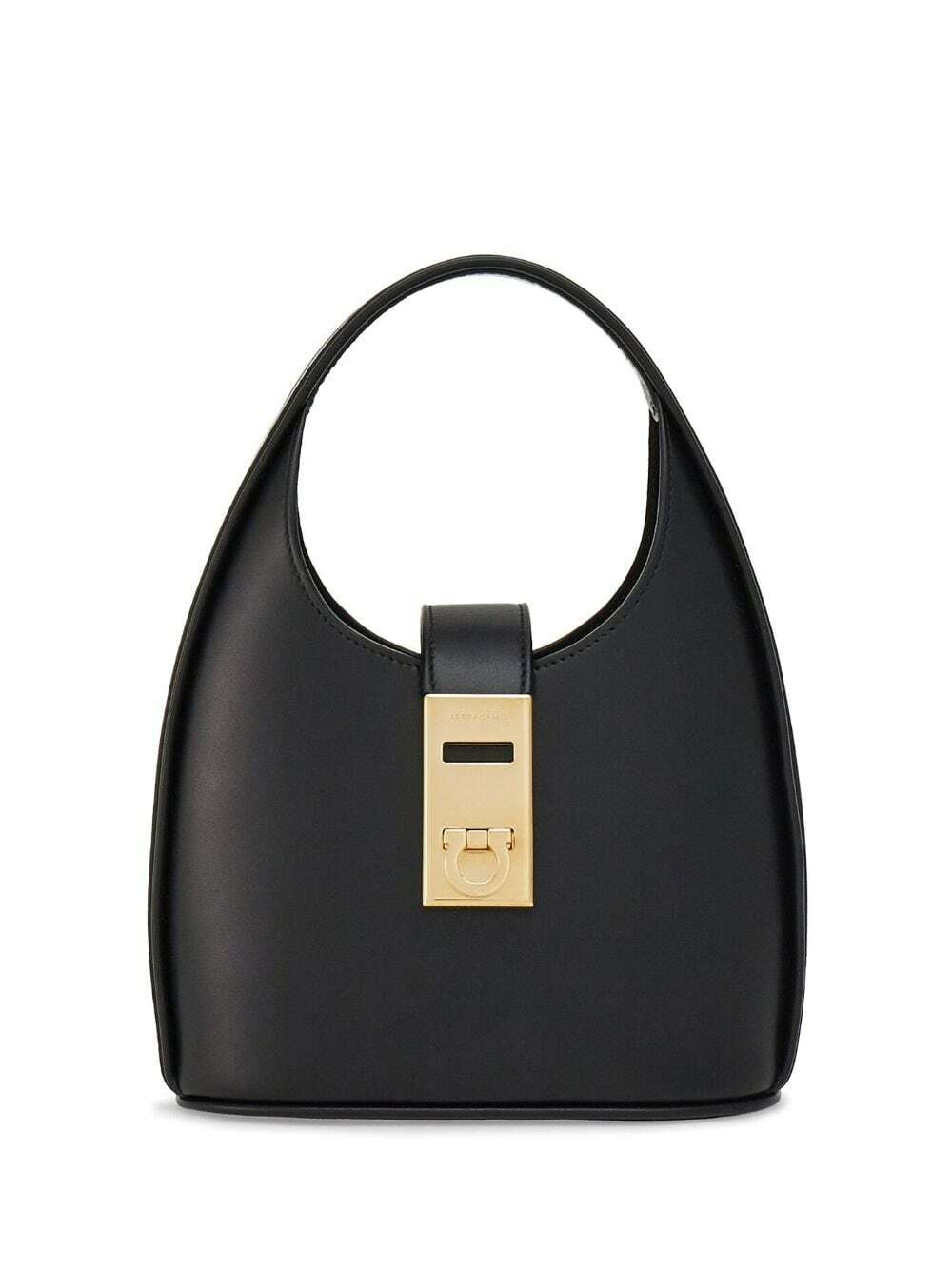
Decades earlier, Ferragamo had drawn on bit-and-gate motifs, and building on that legacy emerged the Gancini emblem—a stylized, double-G-style fastening that grew into the label’s hallmark fastening across bags and accessories. Even now, it features on numerous current styles, offering instant visual recognition be it a wallet, belt, or handbag strap. Thanks to that ongoing visual thread, buyers searching for ferregamo or salvatore ferragamo online soon come to associate the brand with that particular hardware element.
Moving through the 1990s and 2000s, guided by creative directors such as Massimo Giorgetti and subsequently Paul Andrew, Ferragamo bags became firmly established within premium handbag discussions next to labels such as Gucci, Prada, and Bottega Veneta. The house also branched out into ready-to-wear, eyewear, fragrance, and menswear, but the bag category remained one of the most searched and purchased categories, notably as online retail brought a ferragamo shop to clientele extending well beyond Florence or Milan flagship stores.
The Qualities That Shape a Ferragamo Bag In Today’s Market
Present-day Ferragamo bags balance time-honored design touches with modern silhouettes. The house continues to use Italian leather obtained and processed within Italy, a tradition dating to Ferragamo’s original Florence workshops. Structured top-handle bags, the Gancini clasp, and clean architectural lines remain defining traits setting apart a salvatore ferragamo bag from competitors that rely on conspicuous logos.
Buyers looking into a ferragamo bags overview in 2026 will find the range spans classic top-handle totes, crossbody styles, and evening clutches, every one echoing a different facet of the brand’s design history. Some models directly reference archival shapes from the 1960s and 1970s, reworked with updated proportions and hardware finishes suited to current tastes. Still others favor a pared-back aesthetic, suiting buyers after the heritage link without loud logos.
What the bag is made from also shapes its identity significantly. Calfskin, saffiano-grain leather, and exotic hides have all shown up throughout various collections through the generations, with quality control remaining closely tied to the company’s Florence-based production standards. That reliability is a key driver of the brand’s strong resale value, a consideration savvy handbag buyers factor into acquisition decisions when comparing luxury houses.
Weighing Sought-After Ferragamo Bag Types
For anyone hoping to work out which ferragamo bags rank as the best or figure out which style fits their lifestyle, lining up categories for comparison helps illuminate the advantages and everyday applications of each. Below is a general comparison of common bag types found across today’s Ferragamo collections.
| Bag Category | Signature Detail | Ideal For |
|---|---|---|
| Top-Handle Carryall | Architectural silhouette featuring Gancini hardware | Workdays, routine errands, business settings |
| Crossbody | Adjustable strap with a compact build | Travel, hands-free daily use |
| Formal Clutch | Minimalist shape, refined leather finish | Dressy events, evening outings |
| Shoulder-Carry Bag | Softly structured build, mid-size capacity | Everyday versatility, casual-to-smart outfits |
This sort of side-by-side breakdown is a helpful starting point for anyone compiling their own list of top ferragamo bags, since everyday demands count for just as much as style preference. Someone who travels often will value different features than a shopper focused mainly on evening wear, even inside the same label.
Why the Brand’s Legacy Still Holds Appeal in 2026
Nearly a century after Salvatore Ferragamo first opened his Florence workshop, the brand’s appeal rests on a distinctive mix: genuine design innovation paired with disciplined craftsmanship. Few luxury houses can point to patented heel constructions, celebrity clientele tracing to the silent-film Hollywood era, and a family-run continuity spanning generations, all coming together in a single handbag line.
For shoppers browsing a ferragamo shop today, that heritage amounts to more than a marketing story. It influences real, material decisions, from how the leather is sourced to the hardware finishing to the proportions of each silhouette passed down from sketches archived decades ago. Understanding this lineage clarifies why longtime collectors rank certain bags among the best salvatore ferragamo bags, even as newer releases continue drawing first-time luxury buyers pulled in by the brand’s reputation.
Whether someone is comparing a salvatore bag versus rival brands or just wondering regarding the way a humble Italian craftsman built a far-reaching enterprise, the underlying thread stays the same: obsessive attention to construction, a readiness to push boundaries despite limits, and a refusal to separate function from beauty. That philosophy, first taking root in a small atelier in Bonito more than 100 years ago, still anchors every bag, footwear item, and accessory carrying the Ferragamo name in the present day.
Leave a Reply