If you have spent an arvo at a live card room or logged into an online table, you already know that poker variance in cash games can turn a solid session into a frustrating one before you have had a chance to adjust your line. From a consumer standpoint, the real question is not whether swings happen, but how much a platform tells you about them, how it frames expected downswings, and whether the product design quietly pushes you to chase losses. This walkthrough looks at how Australian players actually encounter those swings, what responsible gambling cues matter, and how to judge whether a cash game environment is transparent enough to play over the long term.
How Variance Shows Up at the Table
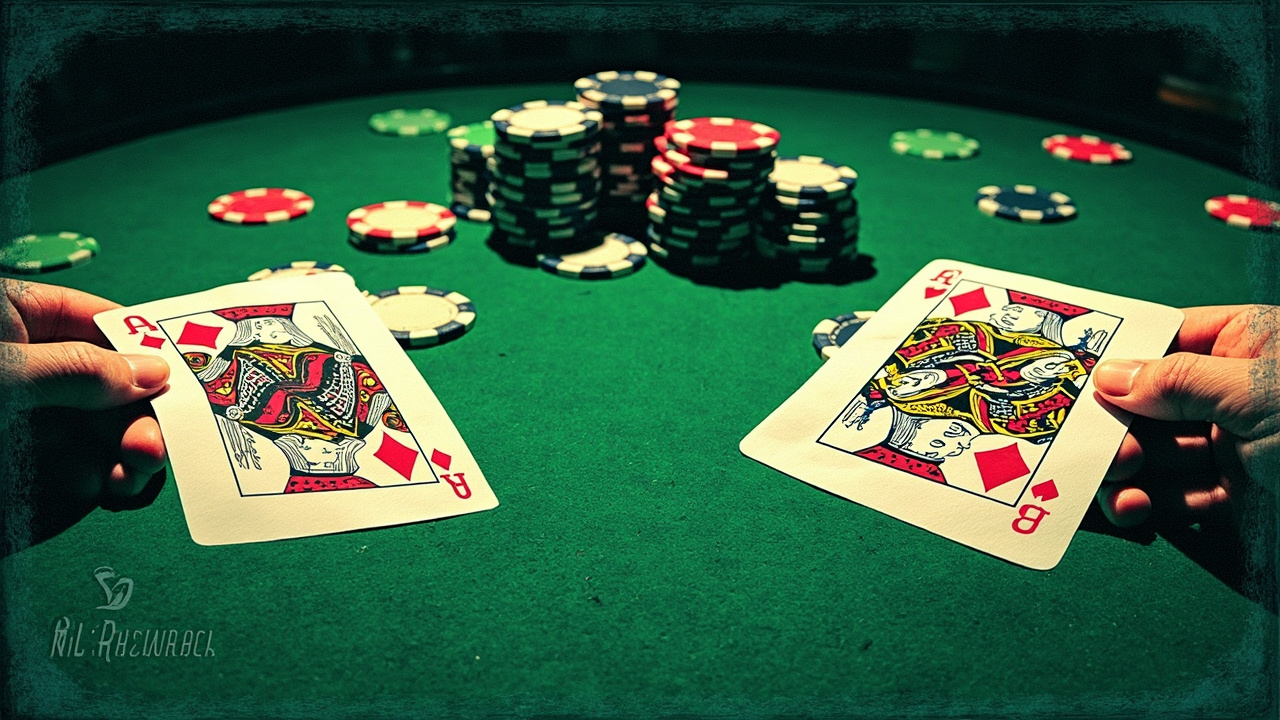
Variance in cash games is the ordinary noise around your expected result, and it shows up in ways that have nothing to do with skill on any single session. A player who is making consistently good decisions can still lose three buy-ins in a row because short-term card distribution, all-in confrontations, and the timing of big pots all introduce randomness. In a typical no-limit hold’em cash game, even a strong edge can be buried for hours when several coin-flip spots land against you in quick succession. That is why bankroll planning matters more than any single hand: a sensible stop-loss, a defined buy-in size, and a clear view of your rolling results are the practical buffers that keep a downswing from becoming a financial problem.
From a player-experience angle, the way a platform presents results and history can either calm you down or nudge you toward overplaying your edge. Clear session summaries, honest win/loss tracking, and visible rake or fee disclosures let you separate skill from short-term luck. When those details are buried or presented in a way that highlights big wins without context, it becomes easier to misread a normal swing as a signal to play more aggressively. That is where responsible gambling cues should step in, not as a slogan, but as practical friction such as clear time-on-app reminders, deposit limits that are easy to set before you play, and straightforward access to self-exclusion options without hidden menus.
The Adelaide card scene has long had its own rhythm, and many players there reckon that live cash games make variance easier to absorb because you can see the pace of the room, the size of the table, and the mood of the game in real time. Online, the same player can feel that pace compressed, which is why it helps to treat a digital cash game as a different product rather than a direct substitute for a local table. If you are comparing environments, it is worth asking whether the platform gives you enough information to judge your own results honestly, rather than just showing highlight reels of big pots.
Reading the Downswing Without Chasing It
A practical way to handle poker variance in cash games is to treat your results as a moving average rather than a verdict on any single hour. Suppose you sit down with a buy-in that is a small fraction of your total bankroll, play your usual stakes, and then run into a stretch where several all-in decisions go against you. A well-designed cash game environment will let you step back, review the hand history, and decide whether your actual decisions were sound, instead of pushing you toward a bigger stake to “make up” the loss. That distinction matters because chasing is where a normal downswing becomes a real money problem.
Transparency around costs is part of the same picture. Rake, time charges, and any tournament fees or cash game add-ons should be easy to find before you commit, because those costs directly affect how much edge you need to overcome variance in the first place. A platform that hides fee details until after you have deposited is not giving you a fair basis for judging whether the game is worth your time. In practice, players who stay in the game long term tend to be the ones who can see their true cost per hour and compare it against their own results, rather than relying on the memory of one big pot or one bad beat.
A contrasting viewpoint comes from Isla Smith, Commercial Director, Southern Reef Gaming, who has argued that some level of visible excitement is part of a healthy product, provided it does not obscure the underlying risk. Her position is that players should be able to see big pots and memorable hands without those moments being used to imply that the next session is likely to be equally generous. That is a reasonable caution, because a platform can be entertaining without being honest if it presents variance as something you can outplay with enough confidence. The consumer-friendly version of that same idea is simpler: entertainment is fine, but it should not be dressed up as a reliable way to recover losses.
Ella Carter, Senior Market Analyst, Southern Star Esports, takes a more process-focused view, noting that players who track their own results over many sessions tend to interpret swings more accurately than those who judge each session on its own. Her point is less about any one platform and more about the habit of keeping a running record, which makes it easier to tell whether a rough patch is ordinary noise or a sign that your stakes are too high for your current bankroll. That kind of self-review is one of the few tools that actually helps with variance, because it turns an emotional reaction into a measurable pattern.
If you want a practical place to compare how different products frame cash game play, you can look at how a site like plinko betting presents its own version of chance-based play, because the contrast can sharpen your sense of what a poker cash game should and should not promise. The comparison is useful precisely because a pure chance format makes the role of randomness obvious, whereas a skill-based cash game can disguise the same randomness behind decision-making language. That distinction is worth keeping in mind whenever a platform talks up its “softest games” or suggests that a bad run is mostly a matter of finding the right table.
Who This Kind of Cash Game Play Suits
Cash games suit players who are comfortable with swings and willing to treat each session as one data point in a longer record. If you prefer a result you can judge immediately, a cash game’s variance can feel unnecessarily noisy, because even a good decision can lose money in the short term. The practical fit is less about being an expert and more about having the temperament to accept that your edge may take many sessions to show up, and that a single bad run does not mean the game is rigged or that you have suddenly lost your ability.

For players seeking a different type of entertainment where visual feedback is immediate, alternative games may offer less volatility. Some enthusiasts explore digital formats like plinko betting to experience a distinct style of chance-based play. You can review the mechanics and rules at https://plinkomachineau.com/ to see if this format aligns with your preferences.
It also suits players who are disciplined about stake size and bankroll limits, because those are the controls that make variance manageable rather than dramatic. Someone who moves up too quickly after a win, or down too far after a loss, is more exposed to the emotional side of swings than to the mathematical side. In that sense, the right fit is a player who can set a buy-in, stick to it, and leave the table when the session has run its course, rather than treating every hour as a test of whether the cards are finally “due.”
For Australian players thinking about ongoing value after any welcome offer, the relevant question is whether a platform gives you reasons to keep playing that are separate from the first deposit. Recurring promotions, cashback, loyalty or VIP tiers, and regular tournament schedules can all matter, but only if they are presented honestly and do not encourage you to play beyond your limits just to qualify. A cash game environment that keeps you interested because of the actual game, rather than because of a constant stream of bonus pressure, is usually the one that fits a responsible long-term habit.
The practical test is straightforward: can you see your own results clearly, can you set limits without jumping through hoops, and does the platform treat variance as a normal part of the game rather than a problem to be solved with more play. If those pieces line up, cash games can be a reasonable way to enjoy a skill-based card game with your eyes open. If they do not, the same variance that is ordinary in theory can become expensive in practice, especially when a platform makes it easier to chase than to stop.
When you are deciding whether a cash game environment is worth your time, the most useful comparison is not the size of the welcome offer but the way the product handles ordinary swings and ordinary costs over time. A transparent platform will give you enough information to judge your own play, enough friction to keep a bad run from becoming a bigger one, and enough honesty to admit that luck plays a real role even when your decisions are sound. That is the standard worth applying, because poker variance in cash games is not something you eliminate so much as something you manage, and the management starts with the environment you choose to play in.